How Registration and Profile Creation Work in PSC Thulasi
The Kerala Public Service Commission, or KPSC, manages recruitment for various government jobs in Kerala. PSC Thulasi is the online portal where candidates register and create profiles to apply for these positions. This system uses a One-Time Registration, or OTR, process that allows people to set up their details once and use them for multiple job applications over time.
Registering on the portal makes it easier for job seekers to stay updated on vacancies, submit applications, and track their progress. It saves time because candidates do not need to enter the same personal information repeatedly. Understanding how registration and profile creation work helps avoid common mistakes and ensures a smooth experience when applying for government jobs in Kerala.
The process is straightforward and designed to be user-friendly. It requires basic documents like a photo, signature, and ID proof. Once completed, the profile becomes the key to accessing exam notifications, hall tickets, and results through the official system.
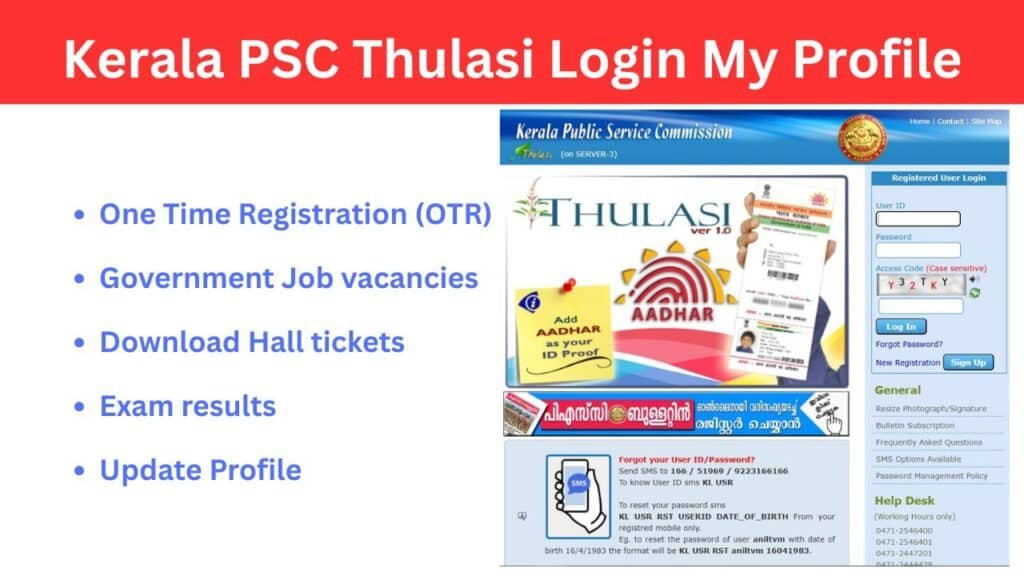
What is PSC Thulasi?
PSC Thulasi serves as the main online platform for the Kerala Public Service Commission. Candidates use it to handle all stages of the recruitment process. The name Thulasi comes from the commission's headquarters location.
The portal supports One-Time Registration, which means candidates create a single profile for life. This profile stores personal, educational, and other details needed for job applications. Many people refer to the official site as thulasi psc when looking for registration guidance.
It connects candidates directly with government job opportunities across departments. The system ensures fairness by maintaining accurate records and providing equal access to notifications.
- Centralized platform for all KPSC recruitments
- One-time setup for repeated use
- Stores personal and qualification details securely
- Provides updates on exams and vacancies
- Supports document uploads like photos and signatures
Why One-Time Registration Matters
One-Time Registration simplifies the application process for government jobs. Instead of filling out forms for each vacancy, candidates complete their details once. This reduces errors and saves effort over time.
The registration creates a unique user ID and password. These credentials give access to the profile anytime. It also allows the commission to verify information quickly during selection.
Many candidates find this feature helpful because government jobs attract large numbers of applicants. A well-maintained profile increases chances of successful applications.
- Avoids repeating basic information
- Reduces form-filling time for each job
- Keeps records updated in one place
- Helps in quick verification by officials
- Enables easy tracking of application status
Documents Needed Before Starting
Before beginning registration, gather all required items. This prevents interruptions during the process. Common documents include a recent photograph and scanned signature.
An active mobile number and email address are essential for verification. These receive OTPs and important alerts from the commission. Also prepare an ID proof like Aadhaar or voter card.
Having everything ready makes the steps flow smoothly. Double-check file sizes and formats to meet the portal requirements.
- Passport-size photograph (recent, clear, light background)
- Scanned signature in specified dimensions
- Valid mobile number for OTP
- Active email address
- Government-issued ID proof details
Step-by-Step Registration Process
Start by visiting the official portal and clicking on the new registration option. The form guides users through several simple pages. Each step collects specific information.
First, enter personal details like name, date of birth, and gender. Then add communication information such as address, mobile, and email. The system often verifies the mobile number with an OTP.
After filling basic data, upload the photograph and signature. These must follow size and quality rules. Finally, preview everything before submitting to create the profile.
- Access the portal and select new registration
- Enter personal information accurately
- Provide contact details and verify OTP
- Upload photo and signature files
- Review and submit the form
Creating and Setting Up Your Profile
After registration, the system generates a unique user ID. Use this along with the chosen password to log in. The profile page shows all entered details for review.
Candidates can add more information like educational qualifications, experience, and community details. This completes the profile for job applications. Keeping it updated ensures eligibility for relevant posts.
Many users access further features after initial setup. For example, to apply for posts or download admit cards, login access becomes necessary through the same credentials. Regular checks help catch any needed changes early.
- Log in with user ID and password
- Review personal details for accuracy
- Add education and experience records
- Update community or reservation info
- Save changes and confirm profile status
Photo and Signature Upload Guidelines
The photograph must show a clear front view of the face. Use a light background and avoid shadows or headwear unless required for religious reasons. The file size limit is usually small to ensure quick uploads.
The signature should be scanned in black ink on white paper. It needs to fit specific pixel dimensions without blurring. Both uploads happen during registration and stay linked to the profile.
Follow these rules to prevent rejection. The commission uses these images on hall tickets and other documents.
- Photo size around 150x200 pixels, under 30 KB
- Light background, full face visible
- Signature in black on white, same dimensions
- No glasses or headgear unless necessary
- Recent photo preferred for accuracy
Common Mistakes to Avoid
Many people enter wrong names or dates that do not match official records. This causes issues later during verification. Always double-check against certificates.
Using invalid mobile numbers or emails blocks OTPs and alerts. Another error is uploading photos or signatures that exceed size limits or fail quality checks.
Forgetting to update the profile after changes in details can affect eligibility. Take time to review everything before final submission.
- Mismatching name with official documents
- Entering incorrect contact information
- Uploading oversized or unclear files
- Skipping profile updates after changes
- Choosing weak or forgotten passwords
After Registration: What Comes Next
Once the profile is active, candidates receive confirmation through email or SMS. They can log in anytime to view notifications for new vacancies. The portal shows eligible posts based on qualifications.
Applications for specific jobs require selecting the post and confirming details from the profile. Hall tickets and other updates appear in the dashboard after submission.
Keeping login details safe is important. The system provides tools to recover passwords if needed using registered information.
In summary, PSC Thulasi registration and profile creation form the foundation for applying to Kerala government jobs. The One-Time Registration makes the process efficient and reliable for candidates. By following the steps carefully and maintaining accurate details, individuals can focus on preparing for exams and opportunities rather than paperwork. This approach supports a fair and organized recruitment system for everyone involved.